Hindu Youth Conference III – “Hindu Awakening”
Many youth activities take place around the country but not many are actually inspired and organized by the youth themselves.
One such team of took it upon themselves to bring together the Yuva around the New York tri-state area for the third installment of Hindu Youth Conference HYC in progressand challenge them both mentally and physically with the theme of “Hindu Awakening”. So how did they go about organizing such an event for youths between the ages of 13 to 25?
Well, it starts by selecting a place to meet and getting parents interested enough to pay the deposit for the place! Regular weekday conference calls supported by hundreds of email between the team and sub-committees to plan the program down to the finest detail and finally to execute those plans. It’s interesting to note that this is the third such youth conference each one progressively improving on the previous in quality and quantity.
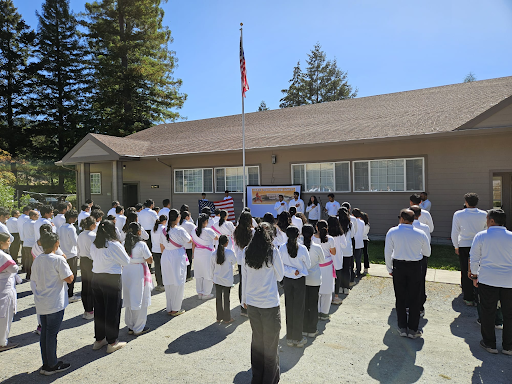
You can talk about “Hindu Awakening” or you could act on it. Vigorous morning exercise and team games brought the 60+ attendees closer. A mini crash course on Samskrit allowed them to follow the instructions and get organized quickly.
Getting everyone to talk and discuss the Misconceptions of Hinduism was done creatively as only youth can again through another game; a game of charades where teams had to first identify the misconception through acting it out and then expand on it. It gave a chance to look at topics like cow worship, wearing of bindhi, re-incarnation and many gods versus one god. By studying these issues, the youths are arming themselves if they’re ever questioned on them by members of our host nation. The western faiths are continually belittling Hinduism using these arguments.
Quite often, in the western world, there is no formal training in Hinduism. We have temples where we do Bhakti but if you do not have access to a Hindu monk or someone who has knowledge in Hinduism, your questions are likely to remain unanswered. The youth at the conference created another forum to talk about Hinduism and that is through group discussion.
This is an open session where any topic related to Hinduism can be brought up and discussed amongst the youth only. There was even a session to learn the art of Raas/Garba, a Gujarati dance celebrated during Navratri.
In this conference, the youth were lucky to have an eye-opening presentation on Bharat Darshan presented by Dr Yelloji Mirajkar. Through a PowerPoint slide presentation, Yelloji used western facts to prove many ancient myths about Hinduism and gave validity to the theories on Ramayan and the Mahabharat as well as a whole host of other interesting facts.
Under sea explorations, NASA satellite images and chemical make up of water in the Triveni-Sangham shed any confusion about the existence of Dwarka, Bridge to Sri Lanka and existence of River Saraswati.
Sri Saumitra Gokale, a Hindu Swayamsevak Sangh (HSS) pracharak, gave a short but inspiring talk on the role of Hindu Youth. Quoting examples such and Vivekananda, Adi Shankaracharya, Ram, Laxman, he explained that in history, it is the youth that had done more for dharma than others. “The youthful energy has achieved great things in the past and is still capable of achieving great things today” was his message.
Srimati Sonal Shah was the chief guest and concluded the day with a definitely “awakening” in the youth. Through her humorous yet serious talk, she exposed the hypocrisy of the western way of life highlighting its wasteful ways and compared them to the simpler but more genuine life in India.
She mentioned how Indians would sacrifice whatever they had for their guests but we in the west cannot even sacrifice a little time for them. Her message was simple but inspiring and paved the way for the all attending the conference to begin thinking about what they can do to help.
It is said that Hinduism is not static; it doesn’t have just one set of scriptures, rules etc. It is ever evolving, expanding, even correcting and adapting through the ages. Through the Hindu Youth Conferences, today’s Hindu youth in America are exploring the beauty of Hinduism.
Perhaps the Hindu Parents need the awakening and further support their children in this venture. If the current trend is anything to go by, then the next conference will require a place that will hold at least 120 participants!
Youth Skill Camp
Sangh Shiksha Varg is an elite institution where transformation of ordinary SwayamSevaks into extraordinary torchbearers, of Sanatana Dharma, begins.
Great Lakes HSS division chose not only to plan and execute this Varg for their Swayamsevak(s) and sevika(s), but was entrusted with doing so for Bhuttanese youth. This was the first national Bhutanese Youth Camp. This is a matter of great pride and honor for our division.
Camp Details:
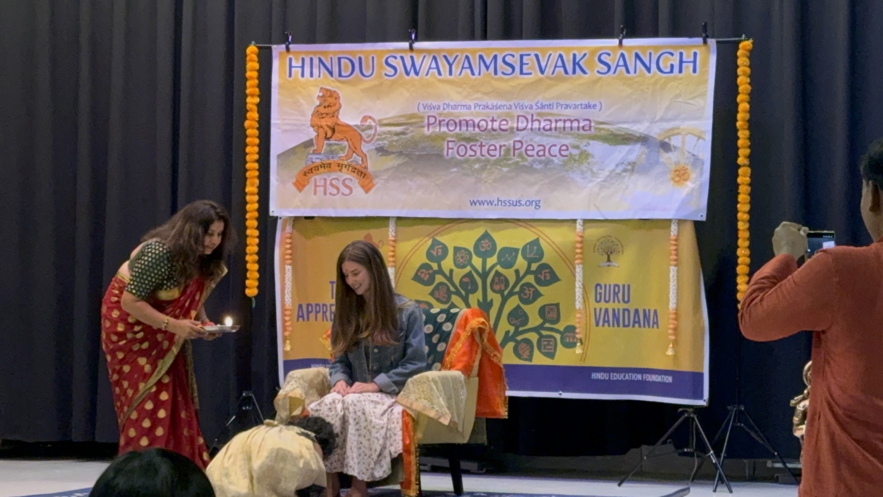
Varg was officially inaugurated with the lighting of the lamp by Vibhag Sanghchalak Sri. Vimal Ji Patel, followed by Udghatan bauddhik by Sri. Darshan Ji Soni. Shiksharthi(s) were introduced to each other via ice breaker games as they will be bunk mates, camp mates for the next five days!. The first evening at the camp then concluded with shiksharthi(s) breaking away into their gana(s).
It was this Varg’s great fortune to have such stalwarts of HSS as shikshak(s), as Ma. Saumitra ji Gokhale, Sri Siddhesh ji Shevade, Sri Yashwant ji Belsare, Sri Darshan ji Soni, Smt. Anjali ji Patel, Sri. Srikanth ji Basarkod and others . Under 3 their expert tutelage, Shiksharthi were cycled through various Vishay, Bauddhik, Khel, Yoga, Niyuddha, Dand, to name a few. Days began at the crack of dawn, at 6am and the camp immersed itself into an intense routine to cultivate characters with such tenacity to prevail over all physical and mental challenges that are strewn in the path of struggle for “Vishwa Dharma Prakashena Vishwa Shanti Pravartake”. For a fledgling Vibhag, this Varg was a giant leap in the noble and lofty goal of organizing and uniting Hindu(s), capable of going shoulder to shoulder in the fight to establish world peace by following the principles of timeless and universal Dharma.
Sharirik Activities:
Baudhik: Intellectual Discussions
The palpable energy Bhutanese Hindu Youth, brought to the saayam vandan was so contagious, that the whole camp was buzzing with positivity. Bhajan renditions by Bhutanese Hindu Youth were sheer magic. The BYC participants who do bhajans at home on a regular basis were fantastic in their tempo, rhythm and crowd involvement.
A week full of learning left every attendee with a better understanding of the great civilization we belong and have the responsibility to carry forward to the generations to come, and promote Dharma and achieve universal Peace.
4th Hindu Youth Conference in East Coast
The 4th Hindu Youth Conference was held on April 16, 2005, on the beautiful campus of the College of Staten Island. The day was filled with exciting activities organized by yuva, for yuva. The theme for the day was Modernized India, which portrayed India’s accomplishments in modern times in the eyes of the world. There were about 60 youths attending the conference.
The conference commenced sharply at 9:00AM with a nourishing breakfast. The 1st session commenced with a vigorous sharirik session. The games played used skills such as teamwork, coordination and just plain luck. The other sharirik session was a bit diverse from the norm, Niyudha 101. Niyudha is the term used for ancient Indian karate. Interestingly, along with learning niyudha and practicing with a partner, there was a blend of combining rhythm to the moves of niyudha during practice. Having niyudha as a sharirik session added a lemon twist to the classic Pepsi.
The conference was not all games, but there were also baudhik sessions. There was an excellent presentation done by Anusha and Shivani Shreedhar on the progress of India, which was a follow up to the last Youth Conference, which showed India’s advancements in ancient times. The presentation showed aspects such as fashion, Bollywood, literature and last but certainly not the least technology. Followed by this presentation, there was a presentation of the Sangha Shiksha Varg (SSV) held in summer of 2004.
Attendees of the SSV spoke of their experience at the Varg and encouraged all to attend the next SSV. There were also group discussions that reflected topics that Hindu youths face in the outside world. Something new was tried this conference, a new session: Act Like Parents. There would be situations set up where some youths acted like parents and some others like kids and each would try to work out the situation trying to understand each other’s points of views. The baudhik sessions gave out knowledge in different aspects, which made the attendees of the conference think.
At the end there was a special peak event, a jeopardy-type quiz. Teams competed each other in the knowledge of the scriptures, India, and pop culture. The closing session included a powerful inspiration mini-speech by Rudra Upadhyay. Youths made a lot of friends and gained knowledge that would be beneficial for future life. The purpose of the Yuva Sangam was a huge success.
Iowa City Hindu Heritage Youth Camp
The first HHYC of the season, in midwest, was held in Iowa City, IA on 15th May. The objectives of the camp were multifold. Primary being, to provide a platform for youths on campus where they can meet, share ideas and experience the energy of group efforts.
"I want students to know", said one volunteer, "that Hindus are not dormant group and they too have lot of activities going on at the campus.", when asked for the reason of his involvement. This certainly
describes second goal which was well achieved by the publicity of the camp. The team-building and raising confidence in volunteers to come up with ideas for more events were just the by-products of the HHYC.
The camp was vibrant with enthusiastic participation of 28 youths. It can be debated if more people would have created more noise while playing touch football or even Guesstures, a variation of dumb-charades introduced by Rushikesh ji Athalye. If games were marked by tremendous amount of energy then discussion session certainly gains point for being vibrant and thought provoking. Moderated by Aditya ji Ingalhalikar and Prem ji Ramakrishnan, the session covered aspects of being Hindu and the heritage we represent here in USA. It was a brainstorming phase where people unknowingly graduated from the definition of being Hindu to what can be done individually and in groups to retain our values and at the same time dispel the misconceptions in the mind of fellow americans & non-indians.
The camp started at 9:00am with some ice-breaker. Khel was the first and certainly the most liked session. Various mandal khel and team games were played, conducted by Rushikesh ji and Prem ji. Although the weather was not cooperative but games, followed immediately by hot tea, kept the cold at bay. An hour of physical activity was coupled by intellectual excersize in the form of team discussion. Yet another round of games including touch football and judwa-bhai awakened some of not-so-much-in-bauddhik fellows :) Again post-games session was a bauddhik but much more interactive. Shri Milind ji Deshpande presented his thought on Hindu youth and pertaining issues. Time was allocated for people to quench their queries which were answered again by Sh Milind ji. After food-for-thought, real food was brought in which was prepared by the core team including Asmita ji Mhaskar, Sangeetha ji Madhavan, Kasturi ji Deshpande, Sridhar ji Dighe, Anita ji Gondi, and Soumik ji Ukil.
By the end of camp everyone boasted of having some addition to their experience and knowledge in some form or other. New people came in touch through the camp and showed their interest in being part of core
team in next event. In all a very good and learning experience. Hopefully we will have more camps organized by bigger core team and attended by even more people in coming days.
Hindu YUVA Varg 2011 Blossoming of the Youth Potential
March 2011 saw the coming together of youth (high school seniors, college students and young professionals) from 15 different states for the sambhag yuva varg, organized at three locations across the United States. A total of 103 youth from 27 different colleges and universities participated in these one and a half day long Hindu youth empowerment camps (yuva varg). The purpose of the varg was to develop a deeper and broader understanding of Hindu Dharma as well as Sangh work, give everyone an opportunity to connect with youth from other places, and inspire the participants to take up active leadership roles in the society.
The yuva varg were a good blend of physical, intellectual as well as spiritual activities.
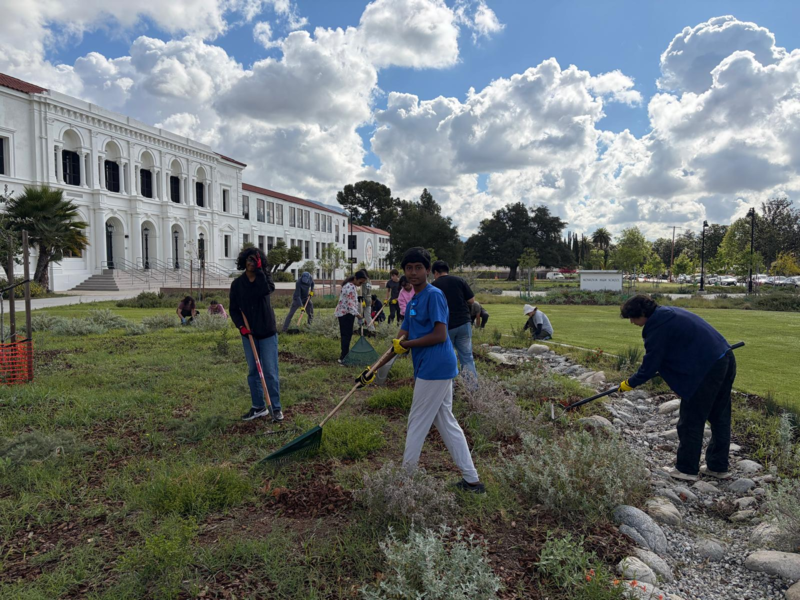
Physical activities included warm-ups, niyuddha, and samata among others. Youth participated with tremendous intensity in Maha-Khel such as Kho-Kho and Capture the Flag. Intellectual activities comprised of various talks/presentations on role of Hindu Dharma in today’s society, Sangh work and social action, understanding Sangh work in US context, Yuva for Sewa (YFS), current state of affairs in North Eastern parts of Bharat and Jammu and Kashmir, inspiring stories from the life of Swami Vivekananda, etc. There were also a number of discussions on a variety of topics including: the significance of the ‘take back yoga campaign’, ‘being active as a Hindu on campus’ and ‘doing sampark on university campuses’. Spiritual activities included ish chintan (morning prayers), yoga, contemplating about Bharat Mata and lively bhajan sessions amongst others. There were also lighter fun-filled activities such as dumb-charades, camp fire and skits showcasing the creativity and talent of the participants.
A number of senior karyakartas were also able to visit the varg and provide able guidance for carry
ing Sangh work forward. Their simple presence during the varg and informal interaction with the participants had a huge positive impact. Food was either delivered from nearby homes or cooked on the campsite. In either case, it was very delicious. Each varg ended with a samarop baudhik on why youth should be doing this work and how they can make a difference.
Participation in the yuva varg was an invigorating and inspiring experience for all. People from all backgrounds came together, learned from each other, and understood ideas from different perspectives. Participants left with a better sense of how they could involve themselves in the society and create a substantial positive impact on their community as youth.
TATTVA (Online Hindu Youth Magazine, Hindu Yuva) launches a new website
TATTVA is an international online monthly magazine, published by Hindu Swayamsevak Sangh’s Hindu YUVA. Starting with the December 2007, Tattva will be released on a new website at www.hinduyuva.org/tattva-blog . Unlike its past issues which used to be in pdf, future issues will be published in an innnovative blog format. The new, more interactive format of Tattva will provide a forum for youth to share knowledge and ideas, voice opinions, discuss issues, and learn from one another.
Some of the latest features on the website allow readers to read articles directly on the website, quickly and easily access of previous issues of Tattva, access articles according to categories including Biographies of famous Indian leaders, the Bhagavad Gita, Hindu history, festivals, editorials, current events, shlokas, yoga, Sanskrit and many more. This website also allows potential discussion forums to emerge as well as sharing of thoughts and ideas through an online community. One can post comments and opinions about particular articles directly in the blog as well as email specific articles to friend and others interested. Raising TATTVA to a more interactive format will enable the creation of an environment for Hindu youth and others to engage in discussions and share the wealth of knowledge that the Hindu dharma and India has to offer.
The 1st anniversary edition of TATTVA, was earlier released in September 2007. As part of this, the magazine, generally published online, was printed and distributed throughout the United States in several universities as well as well as schools and HSS Balagokulam.
The magazine adds a personal touch to the Hindu youth living in the United States by publishing articles written by students on their personal experiences. TATTVA is a unique blend of historical knowledge, spiritual inquiries, current events as well as personal experiences. TATTVA is an attempt to understand the depths of knowledge of the Hindu civilization, increase awareness among others about it, and take a stand on the current day issues. All articles may be accessed at www.hinduyuva.org/tattva-blog and for contributions and other feedback, the editor may be contacted at [email protected]